
AI Compose 커밋 가이드
페이지 편집AI Compose Commit은 현재 코드 변경 사항을 읽고 기존 커밋 형식으로 커밋 메시지를 생성합니다. 요점은 간단합니다. 기록을 더 명확하게 유지하면서 커밋을 작성하는 데 소요되는 시간을 줄이세요.
AI Compose 커밋이란 무엇인가요?
섹션 제목: “AI Compose 커밋이란 무엇인가요?”AI Compose Commit은 변경 사항을 분석하고 이에 대한 표준화된 커밋 메시지를 작성합니다. 보다 일관된 기록을 위해 수동 커밋 작성을 교환합니다.
다음과 같은 경우에 사용하세요:
- 여러 커밋이 필요한 대규모 코드 변경
- 변경 사항이 조정된 다중 저장소 프로젝트
- 표준화된 커밋 형식이 필요한 팀
- 커밋 품질을 향상시키고 싶은 개발자
주요 장점
섹션 제목: “주요 장점”| 특징 | 전통적인 수동 커밋 | AI 작성 커밋 |
|---|---|---|
| 품질 약속 | 개인의 경험에 따라 다름 | 모범 사례를 바탕으로 일관된 품질 |
| 커밋 속도 | 사고와 조직이 필요함 | 원클릭, 즉시 생성 |
| 일관성 | 커밋마다 다를 수 있음 | 표준을 자동으로 따릅니다. |
| 다중 저장소 지원 | 수동 조정 필요 | 자동 저장소 인식 및 그룹화 |
| 시간 절약 | 상당한 시간이 걸릴 수 있음 | 커밋당 10~60초 이상 절약 |
빠른 시작
섹션 제목: “빠른 시작”기능 활성화
섹션 제목: “기능 활성화”HagiCode 데스크톱 애플리케이션에서 AI Compose Commit을 사용하려는 프로젝트로 이동하여 이 기능을 활성화합니다.
중요: 먼저 프로젝트가 HagiCode에 추가되었는지 확인하세요.
트리거 기능
섹션 제목: “트리거 기능”Git 작업 섹션에서 “AI Combined Commit” 버튼을 찾으세요.
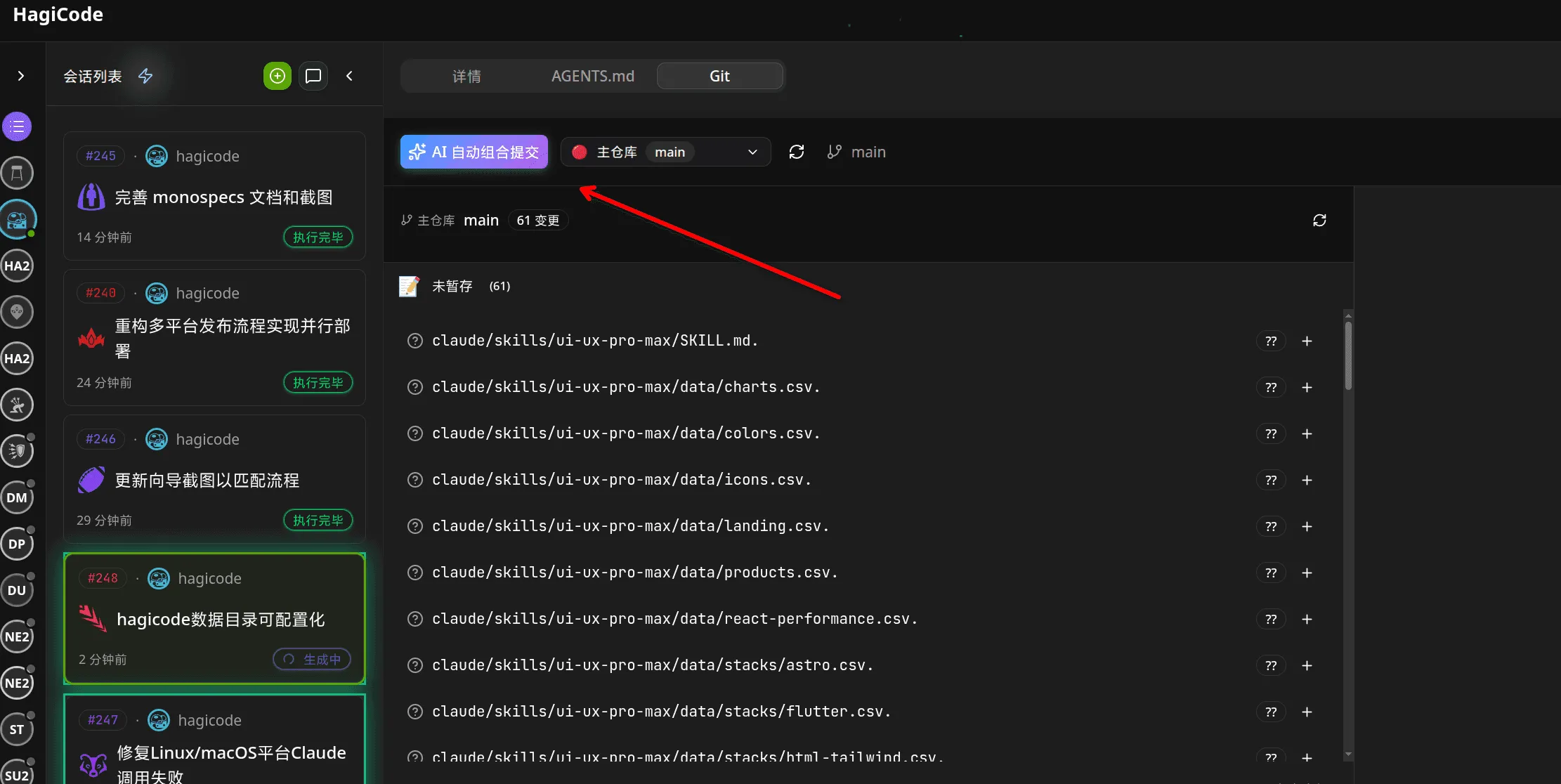
이 버튼은 일반적으로 Git 작업 섹션의 다른 버전 제어 작업 근처에 눈에 띄게 위치합니다.
중요 사항: 이 버튼을 클릭하면 자동 커밋 메시지 생성이 시작됩니다. 커밋을 롤백하거나 수정해야 하는 경우 표준 Git 명령을 사용하세요.
최초 사용 위험 프롬프트
섹션 제목: “최초 사용 위험 프롬프트”AI Compose Commit을 처음으로 사용하거나 승인되지 않은 변경 사항이 있는 경우 시스템에 확인 대화 상자가 표시됩니다.
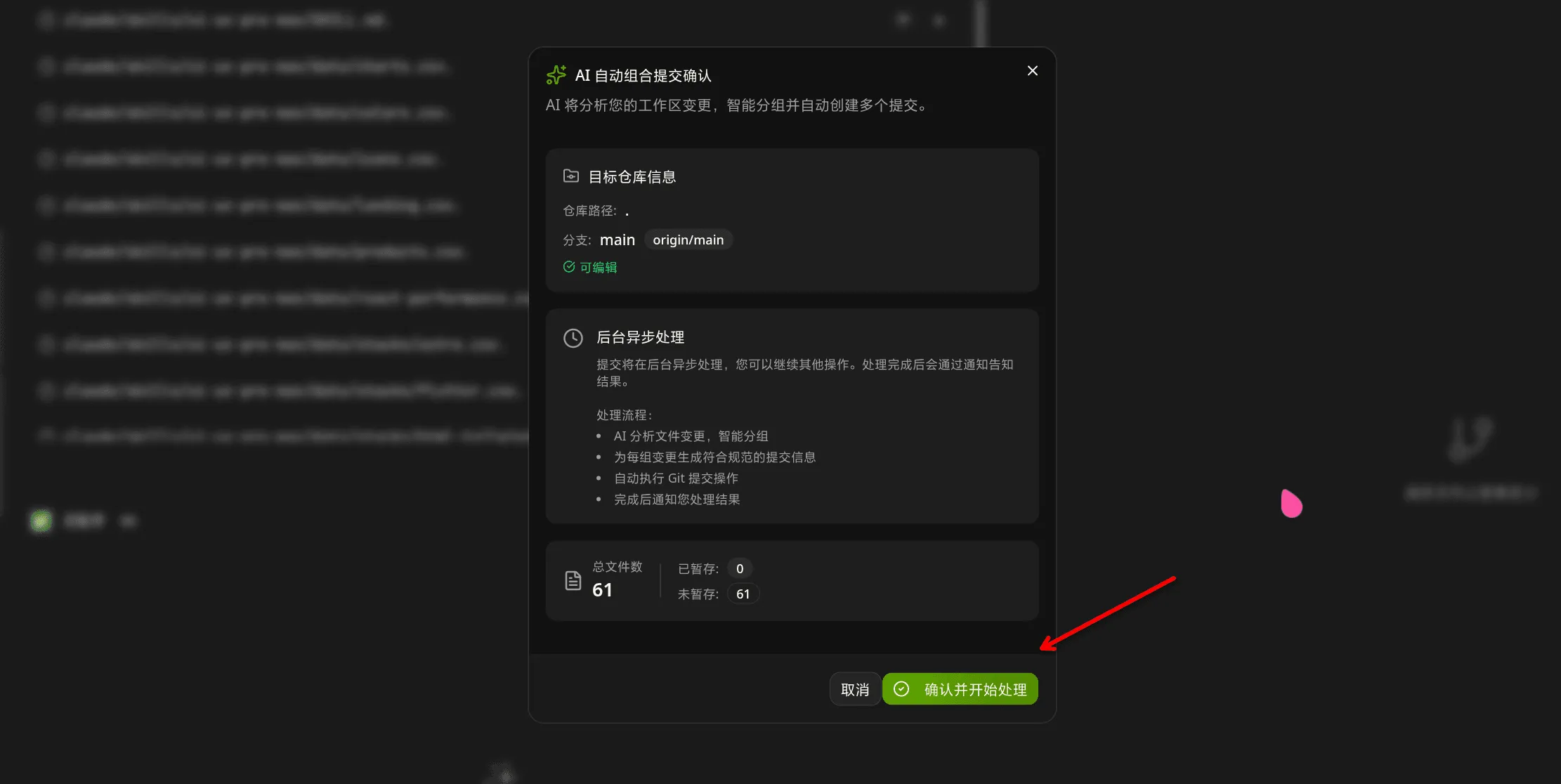
대화 상자에는 다음을 포함한 옵션이 포함되어 있습니다.
- 확인 및 처리 시작
- 위험을 이해하고 더 이상 이 메시지를 표시하지 않습니다.
- 이 옵션을 선택하면 이후 사용이 더 편리해집니다.
자동 커밋의 의미를 이해하려면 처음 사용하는 동안 위험 프롬프트를 주의 깊게 읽는 것이 좋습니다.
결과 보기
섹션 제목: “결과 보기”AI가 처리를 완료하면 성공 알림이 표시됩니다.
커밋 메시지가 생성되어 준비되었습니다. 필요한 경우 완료하기 전에 검토할 수 있습니다.
기능 세부정보
섹션 제목: “기능 세부정보”AI 분석 로직
섹션 제목: “AI 분석 로직”AI Compose Commit은 다음 프로세스를 통해 코드 변경 사항을 분석합니다.
1. 작업 공간 변경 사항 읽기
섹션 제목: “1. 작업 공간 변경 사항 읽기”시스템은 현재 작업공간에서 수정, 새로 추가, 삭제된 모든 파일을 수집합니다.
2. 파일 내용 분석
섹션 제목: “2. 파일 내용 분석”AI는 변경된 파일의 내용을 심층 분석하여 다음을 이해합니다.
- 기능 변경 구현
- 버그 수정 적용됨
- 사용된 리팩토링 패턴
- 종속성이 추가되거나 제거되었습니다.
3. 변경 연관성 식별
섹션 제목: “3. 변경 연관성 식별”AI는 어떤 변경 사항을 그룹화해야 하는지 지능적으로 식별합니다.
- 동일한 기능에 대한 프런트엔드 및 백엔드 변경 사항
- 관련 구성 파일 수정
- 구현 변경과 함께 업데이트 테스트
4. 커밋 구조 생성
섹션 제목: “4. 커밋 구조 생성”AI는 기존 커밋 사양에 따라 구조화된 커밋 정보를 생성합니다.
<type>(<scope>): <subject> <body> <footer>5. Write Commit Message
섹션 제목: “5. Write Commit Message”Each change is transformed into a clear, descriptive commit message.
Commit Format Specification
섹션 제목: “Commit Format Specification”AI-generated commit messages follow the Conventional Commits format:
<유형>(<범위>): <주제> <본문> <바닥글>type: Commit type (required)
feat: New featurefix: Bug fixdocs: Documentation changesstyle: Code style changes (formatting, no code change)refactor: Code refactoringtest: Adding or updating testschore: Build process or auxiliary tool changesperf: Performance improvements
scope: Scope of the change (optional)
- Indicates which part of the project is affected
- Format:
module/nameorcategory/name
subject: Short description of the change (required)
- Imperative mood
- Max 50 characters
- Use present tense: “Add” not “Added”
body: Detailed description (optional)
- What was changed and why
- Can use multiple paragraphs
- Max 100 characters for first line, 72 for subsequent lines
footer: References to related issues (optional)
Closes #123BREAKING CHANGE: ...Co-Authored-By: @anthropic.com>
Example Output
섹션 제목: “Example Output”feat(auth): 사용자 로그인 기능 추가Google 및 GitHub 공급자를 통해 OAuth2 인증을 구현했습니다.
이제 로그인 구성 요소는 다음을 지원합니다.- Google OAuth 통합- GitHub OAuth 통합- JWT 토큰을 사용한 세션 관리
공동 저작자: Claude Opus 4.6 <noreply@anthropic.com>Comparison with Traditional Manual Commits
섹션 제목: “Comparison with Traditional Manual Commits”Manual Commits
섹션 제목: “Manual Commits”Traditional Git commits rely on:
- Developer’s experience and mood
- Individual writing habits
- Time constraints affecting quality
- Inconsistent formatting across team
AI Compose Commit
섹션 제목: “AI Compose Commit”AI Compose Commit provides:
- Standardized format: Always follows Conventional Commits specification
- Intelligent analysis: Understands code context and relationships
- Quality consistency: Maintains professional tone and accuracy
- Time efficiency: Reduces commit writing time from 5-30 minutes to seconds
When to Use Each
섹션 제목: “When to Use Each”Use AI Compose Commit When:
- Large batch changes (multiple files, complex features)
- Coordinated changes across multiple repositories
- Need for high-quality, consistent commit messages
- Team projects with multiple contributors
Use Manual Commits When:
- Small, focused changes (single file, simple bug fix)
- Personal projects with full control over commit quality
- When you have time to craft thoughtful, personalized messages
Multi-Repository Support
섹션 제목: “Multi-Repository Support”monospecs Integration
섹션 제목: “monospecs Integration”When managing monospecs-based multi-repository projects, AI Compose Commit provides enhanced capabilities:
Read monospecs.yaml
섹션 제목: “Read monospecs.yaml”AI automatically reads the monospecs.yaml configuration to:
- Identify all configured sub-repositories
- Match file paths to corresponding repositories
- Access display names and icons for UI rendering
Match File Changes
섹션 제목: “Match File Changes”AI intelligently matches each changed file to the correct sub-repository:
- Analyzes file path in project structure
- Matches against monospecs repository configurations
- Groups related changes together for logical commits
Separate Commits
섹션 제목: “Separate Commits”Each sub-repository receives independent commits:
- Frontend changes committed to
repos/frontend - Backend changes committed to
repos/backend - Maintains independent git history and version control
Co-Authored-By Footer
섹션 제목: “Co-Authored-By Footer”AI Compose Commit appends the currently effective Co-Authored-By trailer to every generated commit. Interactive Git commits and the OpenSpec v1 archive prompt reuse the same resolution rules, so teams only need to maintain one convention.
The precedence order is fixed:
- Project-level config: local Git config in the current repository (
git config --local) - Global config: user-level Git config (
git config --global) - Built-in default:
HagiCode <noreply@hagicode.com>
If a layer is missing name, missing email, or contains an invalid email address, HagiCode skips that layer and falls back to the next one instead of emitting a malformed trailer.
Default output:
공동저자: HagiCode <noreply@hagicode.com>Repository override example:
git config --local coAuthoredBy.name "플랫폼 봇"git config --local coAuthoredBy.email "platform-bot@example.com"Global fallback example:
git config --global coAuthoredBy.name "HagiCode"git config --global coAuthoredBy.email "noreply@hagicode.com"With the local override above, the trailer becomes:
공동 저작자: 플랫폼 봇 <platform-bot@example.com>Operational details:
- If the commit message already contains the same resolved trailer, HagiCode does not append a duplicate.
- If the message already contains a different
Co-Authored-Byline, HagiCode keeps that line and still appends the resolved AI trailer. - Teams should treat repository-level config as the canonical rule and keep global config as a personal fallback.
Advantages for Multi-Repo Projects
섹션 제목: “Advantages for Multi-Repo Projects”Traceability: Clear history of which repository received which changes Coordination: Changes across multiple repos can be committed simultaneously or sequentially Consistency: Uniform commit format across all repositories Efficiency: Reduced coordination overhead for changes spanning multiple repositories
Usage Guidelines
섹션 제목: “Usage Guidelines”Best Practices
섹션 제목: “Best Practices”For optimal AI Compose Commit results:
1. Keep Changes Focused
- Each commit should address a single feature or fix
- Avoid bundling unrelated changes in one commit
- Make incremental progress with meaningful commit messages
2. Clear Code Comments
- Add comments in complex code to help AI understand intent
- Use descriptive comments for non-obvious implementation details
- Keep comments updated as code evolves
3. Reasonable File Naming
- Use clear, descriptive file names
- Follow project naming conventions
- Avoid overly generic names that don’t convey purpose
4. Timely Committing
- Commit frequently as meaningful changes are completed
- Don’t accumulate large batches of uncommitted work
- Each commit should represent a logical unit of progress
5. Leverage Multi-Repo Intelligence
- Let AI group related changes across repositories
- Use descriptive scopes to indicate affected modules
- Review AI’s suggested groupings before committing
Usage Restrictions
섹션 제목: “Usage Restrictions”Limitations
섹션 제목: “Limitations”AI Compose Commit has the following usage limitations:
1. Network Dependency
- Requires active connection to AI service
- Processing time depends on network conditions
- Large codebases may take longer to analyze
2. File Size Limits
- Very large files (>10MB) may exceed processing limits
- Binary files are not analyzed (only text-based content)
- Split large changes into smaller commits if needed
3. Codebase Complexity
- Extremely complex code may be difficult to analyze fully
- Deeply nested or obfuscated code may have reduced accuracy
- Results are best-effort based on visible code
4. First Use Considerations
When using AI Compose Commit for the first time:
- Start with smaller, safer changes to understand AI behavior
- Verify generated commits before finalizing
- Provide clear code comments to improve AI understanding
- Check that project is properly connected in HagiCode
Troubleshooting
섹션 제목: “Troubleshooting”Feature Not Available
섹션 제목: “Feature Not Available”If you don’t see the AI Combined Commit button:
- Ensure the project is added to HagiCode
- Refresh the interface
- Check if this feature is enabled in your version
- Verify your network connection to AI service
No Response After Clicking
섹션 제목: “No Response After Clicking”If nothing happens after clicking the button:
- Check for notification dialogs (may be hidden behind other windows)
- Check browser console for error messages
- Verify network connectivity
- Try restarting the application
Incorrect Generated Messages
섹션 제목: “Incorrect Generated Messages”If AI generates incorrect commit messages:
- Manually modify using
git commit --amend - Add more descriptive comments to help AI understand
- Check code changes are accurately represented
- Re-trigger the feature after making adjustments
Processing Takes Too Long
섹션 제목: “Processing Takes Too Long”If processing seems to be taking an unusually long time:
- Check if there are very large files being analyzed
- Verify network stability
- Try splitting changes into smaller batches
- Check if AI service is experiencing high load
Co-Authored-By Footer Missing
섹션 제목: “Co-Authored-By Footer Missing”If commits don’t include the expected footer:
- This may indicate AI service is unavailable
- Check your API token configuration in HagiCode settings
- Verify network connectivity
- Check whether the local
coAuthoredBy.name/coAuthoredBy.emailconfig is incomplete and therefore falling back to another layer - Consider generating commits manually if issue persists
For more information, refer to the HagiCode documentation or check the monospecs repository for configuration examples.